
Are you seeing many bugs?
Keep an eye out around flowers, lights, windshields

I’m not going to lie: Life without bugs flying in my face feels great.
It’s been a delight to be able to sit outside working on my laptop, with few or no bugs attracted to my computer screen or even the outdoor lights around me. Or to not have to see them splatter across my windshield. Even smelling the flowers feels safer.
Regardless of our human preferences, though, insects have vital work to do for our planet.
They’re pollinators who provide free labor to turn flowers into fruit, decomposers of wood and leaves to release nutrients in the forest, and fodder for birds, lizards, frogs and many other animals we like better than bugs.
And they’ve been quietly vanishing. Given all the invisible services they provide, this is bad news.
Globally, they’ve declined by perhaps 75 percent since the 1970s, when clouds of insects drifted across the land, entertaining children, crashing picnics and pollinating crops.
This lack of insects, especially wild bees, translates into crop yields that are lower by about one- to two- thirds of their potential, according to a 2024 analysis led by Katherine J. Turo and James R. Reilly of Rutgers University.
With other colleagues, they reviewed thousands of yield measurements from dozens of crops around the world to conclude lack of pollinators is lowering yields. This is especially true for some of our favorites: blueberries, apples and—wait for it—coffee.
Usually, when I raise the issue of disappearing insects, people haven’t really noticed it. But once I mention it, it typically dawns on them that they, too, are not seeing many bugs.
I invite you to join me in this informal insect vigil—and I would love it if you shared your observations in the comments here. I’m opening up comments to everyone for this.
Here are three ideas on where to look.
Check out flowers
In the first two weeks of June, I visited Puerto Rico, Ohio, Kentucky, Indiana and Illinois. I’ve been making a habit of checking any flower patches I come across for signs of pollinators. I have seen many lovely blooms but almost no evidence of bugs flying around them.
For the past week or so, I’ve been staying in Saline, Michigan. Huge maples and oaks line the streets, but mowed lawns dominate the below-canopy landscape. As a result, flowers themselves are fairly rare. Bees are even rarer.
A few days ago, I did see what appeared to be a bee flitting around some flowers. As it happens, those particular flowers grew in a small bed that announced itself as a Rain Garden.
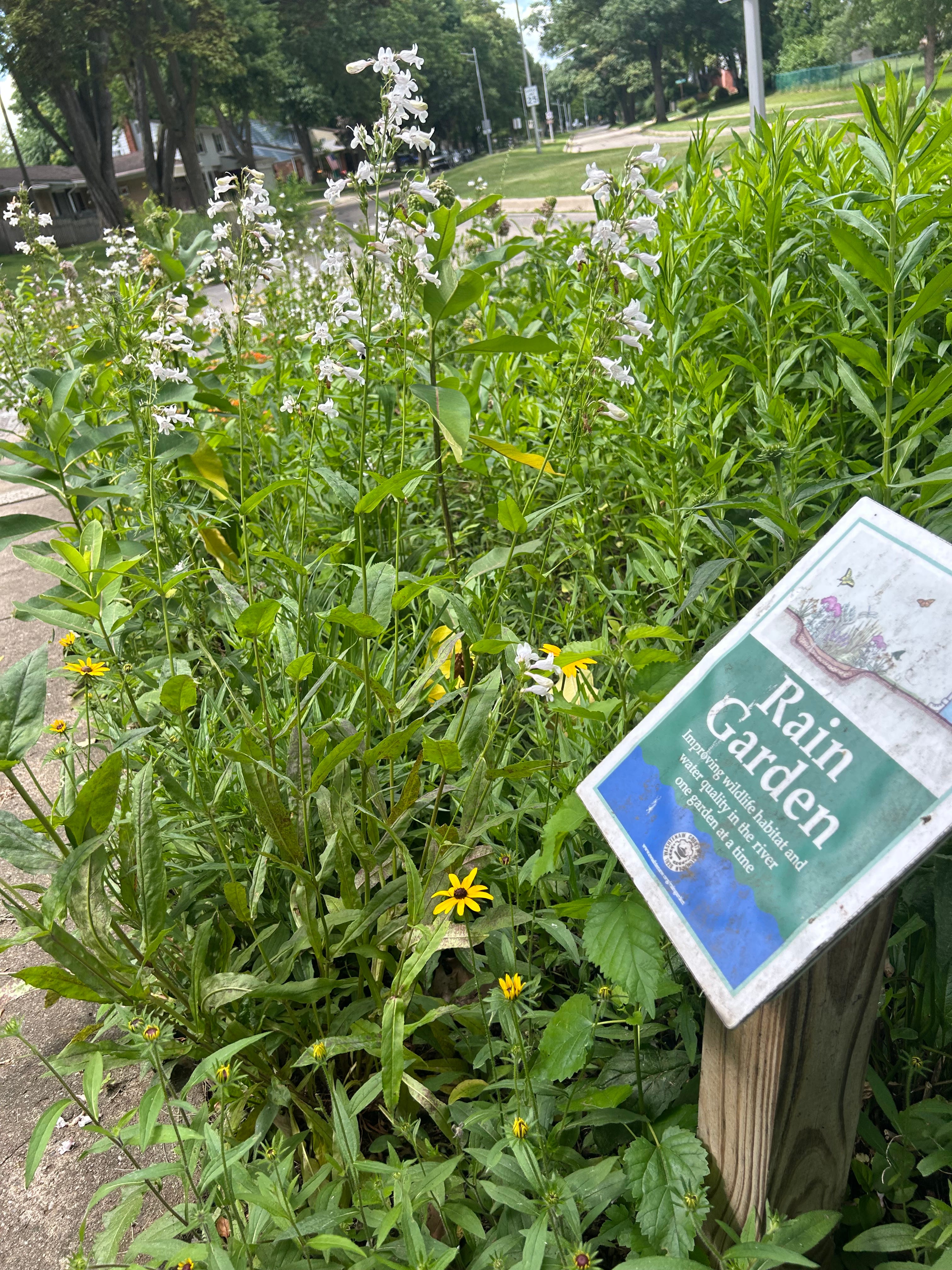
Bee sightings have been rare. The one that visited this rain garden in Saline, Michigan, sped off when I approached. Photo by Melanie Lenart
This morning, I saw another bee. This one, too, was visiting a designated garden, one proclaiming to serve pollinators. So, the pollinator-friendly gardens are working where they exist.
Still, the bees seemed camera shy. Even my presence quickly scared them away.
In contrast, during a few months in Portugal that preceded my June travels, I was the one scared away by the bees.
For a month, dozens of large bees claimed a wisteria bush outside of where I lived in southern Portugal, making it clear they did not want me to come within a few feet of their precious nectar.
Similarly large bees took over a bottle brush tree outside of where I lived in northern Portugal. On sunny days, dozens of them at a time flocked to the flowers, apparently too busy sipping nectar to even notice me.
So, flowers are one place to watch when considering for yourself whether insects are declining. Keep in mind bees will only visit them on reasonably warm days when there’s no rain or high winds to deter them.
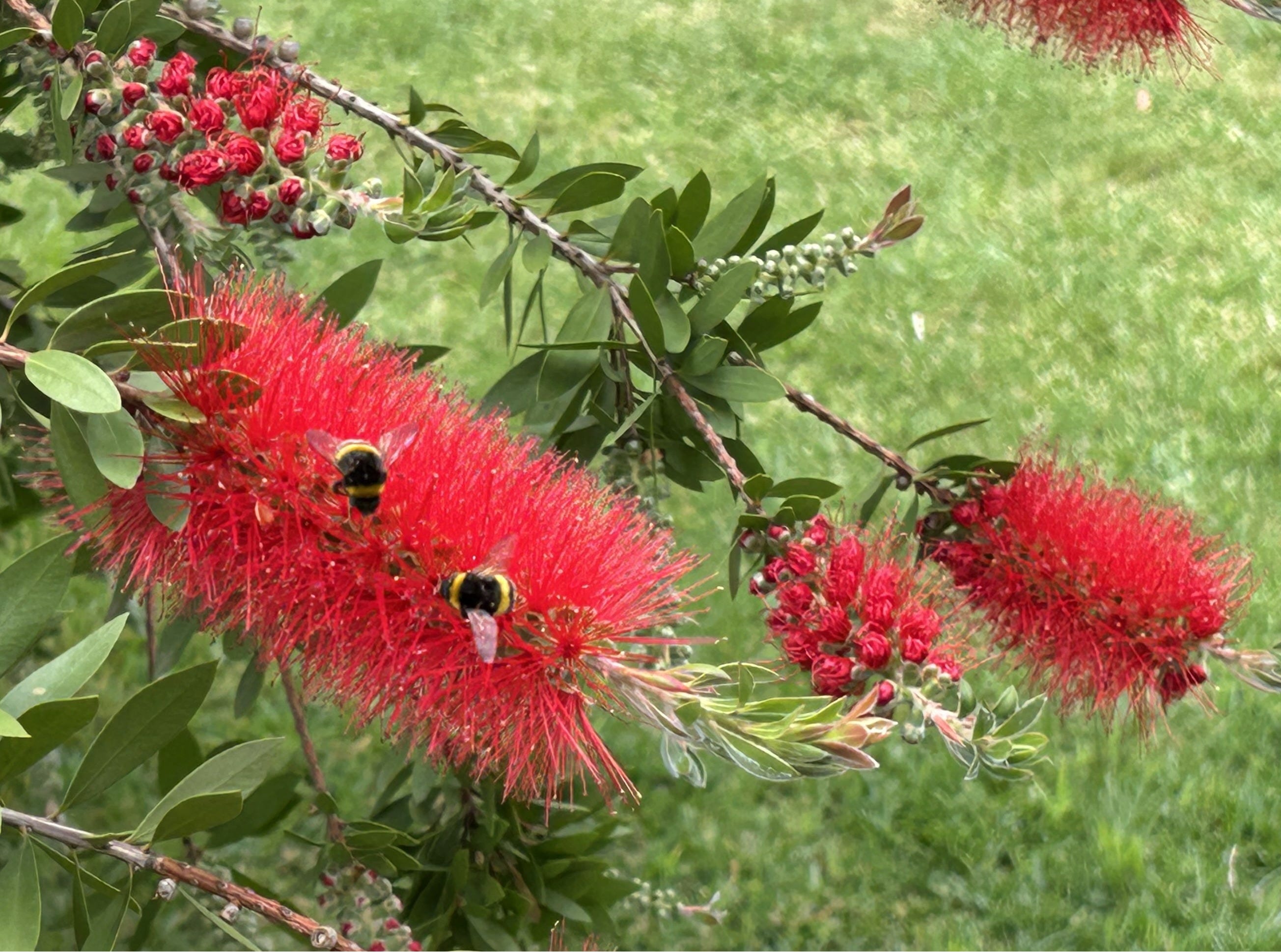
Bees flock to bottle brush flowers in Portugal. Photo by Melanie Lenart
Go to the lights
Probably any of us mature enough to read this have a mind’s eye view of how bugs flock around lights. It’s an annoyance to us, but a real danger to them. Their transfixion on Going to the Light leaves them with little time or energy for seeking food or mates.
Yet, in my casual observations, the former clouds of light-worshipping insects have dwindled down to the occasional bug or two.
During an hour-long evening soak in an inflatable hot tub in Kentucky after a cousin’s June 13 wedding, I noticed only one moth flying around the porch light. Yet the Airbnb porch featuring the hot tub faced a meadow with a forest behind it.
Where were all the night flyers that normally flock to the light?
They weren’t in Puerto Rico, based on my glances at outdoor lights in Isla Verde, Guavate and Luquillo. And I haven’t seen the usual clusters of light-loving bugs in Warsaw, Indiana, or Saline, Michigan, either.
For that matter, it’s been about a year since I’ve seen much insect activity around lights, including while working on my well-lit laptop at night. For example, during an hour of writing in mid-June on an outdoor picnic bench in Oberlin, Ohio, only two bugs landed on my computer screen. And there was a pond nearby.
So next time you’re out at night, glance around at the outdoor lights near you.
Compared to what you’ve seen in past decades or years, are you seeing much bug activity around these beacons of light?
Watch your windshields
Another way to bring the issue home is to watch the windshields of your car. Have you found there’s less need to wash your windshields in recent months or years?
If your experience is like mine, you’ll notice a lack of bug-windshield collisions even after traveling for hours on highways or back roads. That was certainly the case for the rental car, a Nissan Sentra, we drove around Puerto Rico during our roughly three-week stay.
While the rain we enjoyed at least briefly most days might have affected the results, at no point did the windshield require cleaning. Even when driving on sunny days, we had few collisions with insects.
For that matter, even in Portugal—where pollinators claimed flowering bushes for themselves—few bugs marred the windshield of our rental car.
People who have been driving for more than a few years might have noticed a decline in insect splatter compared to previous decades.
Citizen scientists in the United Kingdom are reporting bug collisions with their cars’ license plates as a way to monitor general insect abundance. Participants clean their license plates, then submit photos showing how many insects collided with their plates and other details during specific trips.
The findings are sobering, and highlight that things appear to be getting worse in recent years. For instance, their results suggest a 60 percent drop in insect collisions (standing in for insect abundance) just between 2021 and 2024.
In addition to the UK study on number of bug splats on license plates, several other projects have websites and programs seeking input from people acting as “citizen scientists” to share findings according to a specified protocol. (See the section below “Related Reading” for more on this.)
Less formally, I’d love to hear from you. If you haven’t paid attention to how many bugs strike your windshield, consider doing so the next time you climb into your car.
Is your windshield clean? If not, maybe wash it when you get a chance, and then see how long it takes for it to collect bug splatter. This exercise is especially useful because you can gauge how many miles you traveled between windshield cleanings.
What are you seeing?
If anyone had told me a decade or two ago that I’d be raising an alarm about a dearth of insects, I would have laughed. If only we could have fewer bugs, I would have thought.
Now that I’ve been watching flowers, windshields and outdoor lights for a few years, I’m finding the lack of bugs eerie. What I’m seeing is not normal. It gives legs—six of them, to be exact—to global concerns about an Insect Apocalypse.
If bugs really are declining as much as they appear to be in my travels, it portends a real problem for our living planet.
I’d love to hear some bug lore from the rest of you, wherever you are in the world. Photos are also welcome. Thanks for any thoughts and information you share!
This is part of an ongoing series considering the Insect Apocalypse. On Wednesday, I wrote about how insect fluctuations in Puerto Rico relate to hurricanes. Next week, I’ll put Puerto Rico’s situation into a larger context and discuss how pesticides are likely contributing to a perceived lack of insects outside of the protected forest.
Related reading
2025, “Citizen Science and Insects How You Can Help Researchers from Home” by Muhammad Sharif, published on June 21 in Insect Hive.
https://insecthive.com/citizen-science-and-insects-how-you-can-help-researchers-from-home-1-3736/
2024 study by Katherine Turo, James R. Reilly of Rutgers University and colleagues, published in Nature Ecology & Evolution.
2025, “Speed of insect population collapse confirmed by citizen science experiment” published on May 1 in Le Monde.
Bugs Matter website, with app for residents of Europe.
https://www.kentwildlifetrust.org.uk/get-involved/our-projects/bugs-matter
Excerpt from ‘Citizen Science and Insects How You Can Help Researchers from Home’:
Several well-established platforms connect amateur entomologists with scientific research projects, making your observations count toward larger understanding.
iNaturalist stands as perhaps the most versatile option, allowing users to photograph any plant or animal (including insects) and receive community and AI-assisted identification help, while simultaneously contributing to global biodiversity monitoring.
Seek, developed by iNaturalist, offers a more gamified experience perfect for younger participants or beginners, providing instant identification without requiring account creation. (Download Seek from an app store.)
For butterfly enthusiasts, eButterfly and the North American Butterfly Association’s Butterfly Counts provide specialized monitoring opportunities, while Bumblebee Watch focuses specifically on tracking these important pollinators across North America.
The Great Sunflower Project examines pollinator activity by having participants count visiting insects on specific plants.
Each platform offers different user experiences and research focuses, but all provide straightforward ways to contribute meaningful scientific data from your own neighborhood.
The US-based National Phenology Network also has added a variety of insects to its data collection efforts.
Bugs face their own loneliness epidemic

The Insect Apocalypse. As if we don’t have enough to worry about.
Insect Apocalypse prevention: How to help bring them back

About a decade ago, I found a drowned bug in my dogs’ water dish. I’m guessing it was a lacewing, as it was quite pretty.
The equally scary question is-who eats the bugs? If there are no bugs, there are no birds. If there are no mosquitoes, there are no swallows. There are no reptiles, no amphibians. Where are they? The species that depend on the bugs are diminishing rapidly. We have sown the legacy of our own demise with the chemical fertilizer and pesticides we’ve been using for decades. Who’s responsible, who is liable, for this? Where are the studies, the research, on these questions?
The reason your informal vigil reads as more than anecdote is that you're actually running three independent proxies.
Flower visitation, activity at lights, and windshield or plate collisions each carry different biases, so when all three point the same way, the agreement is the signal, not any single clean windshield. That's also what makes the crude license-plate counts trustworthy: a moving car integrates over whole landscapes and habitats, which a single-site sample never does. The convergence is doing the evidentiary work here, and it's a sturdier footing for the alarm than any one observation on its own.